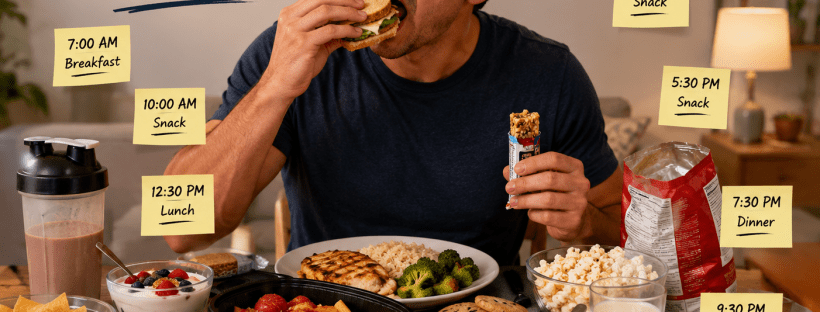
I’m disturbed by some health stats:
- In the U.S., obesity rates increased from 30% of the population (which we already found shocking back in 1999) to the current 40%. Researchers predict that by the 2030s, 50% of Americans could be obese.
- About 21% of adolescents have obesity. That rate quadrupled in the past 50 years.
- Prediabetes, diabetes, gestational diabetes are also increasing along with weight; these are inflammatory conditions that are identified as precursors to everything from heart disease to liver disease to dementia.
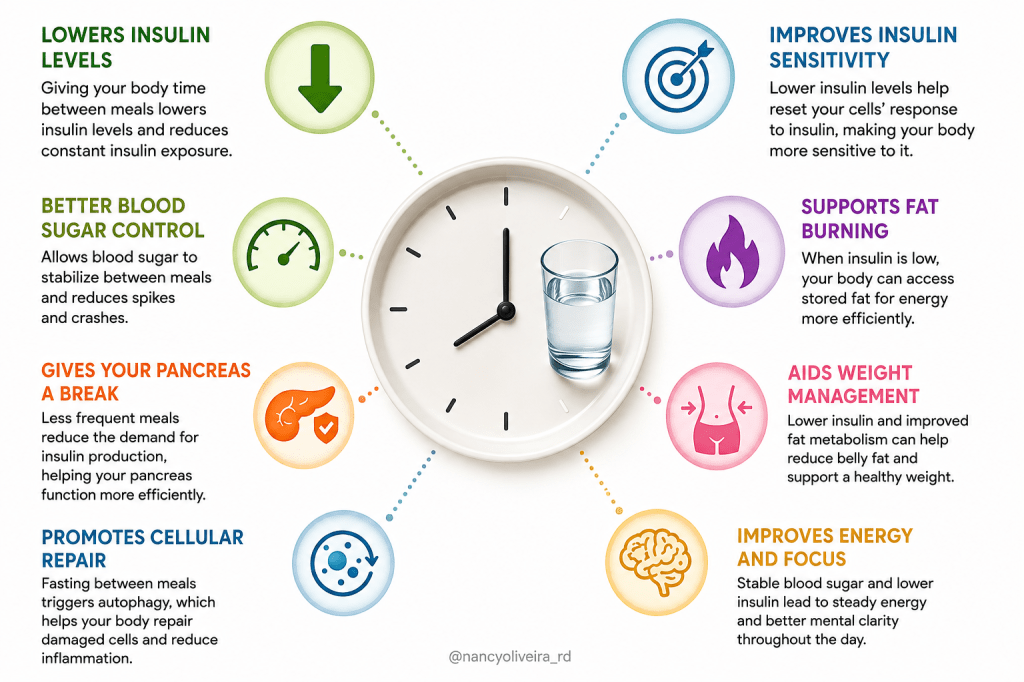
Some very recent data show obesity rates slowing down because of the widespread use of GLP-1RA medications, which can be miraculously effective when nothing else has worked. They can be as effective as bariatric (gastric) surgery, but not as many Americans are interested in going under the knife to lose weight. GLP-1s slow down digestion and help the hormones that make you feel full hang around longer in your gut. So people simply forget to eat and go longer between meals without eating. Blood sugar drops and there’s a range of metabolic benefits that follow (see image below). Of course, the other extreme becomes dangerous if folks eat too little such as one meal a day, but I’m focusing on those who are just eating less between meals and maybe a 12-hour fast overnight.
So I introduce a novel thought. Maybe we should encourage not eating all day long, not easily reaching for snacks. A while back, my profession suggested that people eat 6 small meals a day to reduce daytime hunger and improve digestion. In theory, that should work. But the way this advice was translated by the average person was to eat 6 times a day…not necessarily small meals. So people got used to constantly grazing. This can lead to your blood sugar constantly spiking, which causes a chain reaction…

Frequent blood sugar spikes trigger your pancreas to constantly release insulin with the goal of shuttling the blood sugar into your cells for energy (with the extra not used as energy to be stored as fat). But if you’re always eating, your pancreas works overtime to keep releasing more insulin and you end up with elevated insulin levels. A lot of insulin hanging around can eventually make your body not use it efficiently. That becomes insulin resistance, which is an animal on its own.

If you already have prediabetes or diabetes, I suggest eating 3 meals a day and trying not to snack unless you really need to. The American Diabetes Association recommends that blood sugar before meals be 80-130 mg/dL, which should happen if you allow 3-4 hours between meals. If you’re really hungry, choose a low-carb snack that won’t spike blood sugar, such as cottage cheese with a few sliced strawberries, a handful of nuts, half an avocado, or a no-added-sugar Greek yogurt with pumpkin seeds.
The reason I say 3 meals a day is because I’m not a fan of 1-2 meals a day for the average person (like some do with time-restricted eating). You risk becoming overhungry when you’re trying to fast while you’re the most active during the day. The other option is to eat low-carb meals and snacks all the time, but that can be difficult and boring.
It’s a lot to digest. Let me know your thoughts!


I’ve thought about intermittent fasting for some time but never tried it.
LikeLiked by 1 person
There are different ways but I usually suggest an overnight fast of 12 hours. Research so far shows best benefits with 14 hrs overnight. I think there’s many benefits of helping deeper sleep, gut “cleanout”, brain reset and rebooting the body to get used to not always having food.
LikeLiked by 1 person
Being a certified pig I’d definitely do it overnight so I’d sleep through the hunger! 🙂
LikeLike
Haha you have to protect your gut for the long haul as a professional eater!
LikeLiked by 1 person