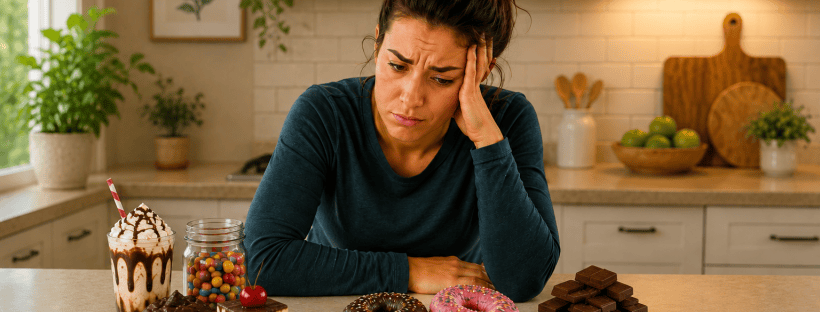
You crave a donut and an iced mocha latte during the day, and then you can’t stop thinking about double-fudge brownies or Cherry Garcia ice cream late night. Guilt sets in, “Why can’t I stop eating all these sweets?“
Patients I see who say this often sound resigned, like it’s just genetic or they have extremely low willpower. But there are complex factors that create very real sugar cravings that have nothing to do with willpower:
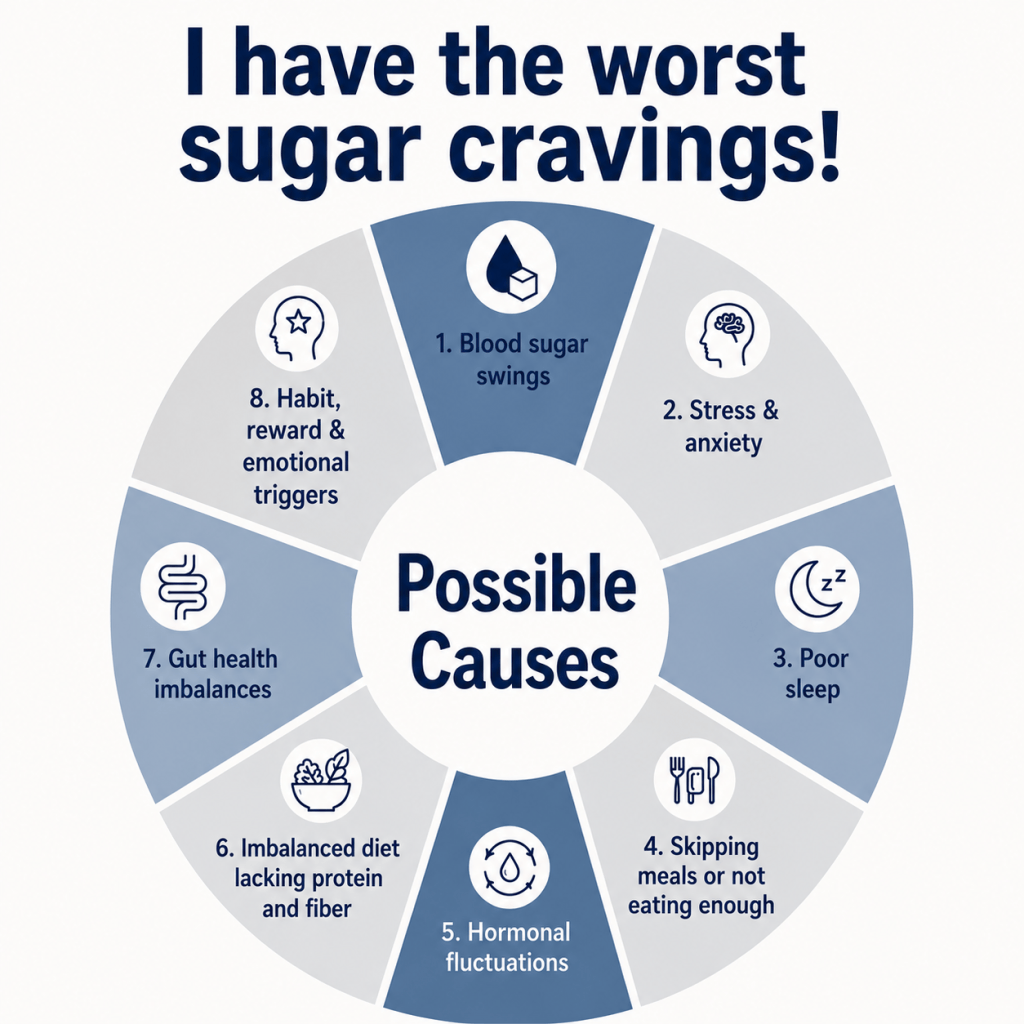
Many of these risk factors alter normal hormone levels of insulin, ghrelin, leptin, and cortisol that are associated with cravings. Can you believe there’s such a thing as “Neurobiology of Cravings”? I wrote about them here https://nutritionsource.hsph.harvard.edu/cravings/. There’s also the challenge of our food environments, enticing us to splurge on cheap, delicious sugary treats and ultraprocessed foods that in turn can fuel more cravings. Thankfully, there are positive strategies to help:
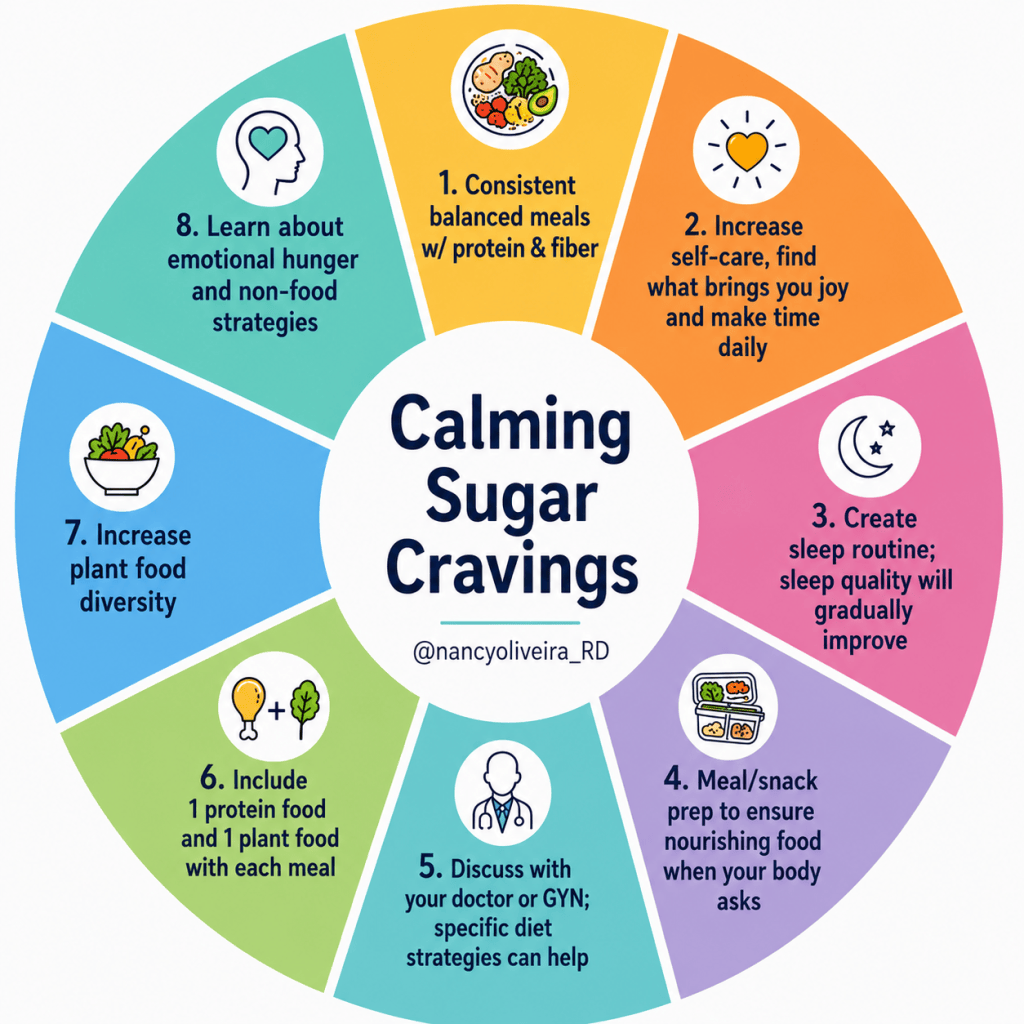
Looking at this wheel may feel overwhelming — where and how to start? If you have access to supportive healthcare providers, I recommend choosing one goal from the above and working with a registered dietitian or certified health coach to get started. Any small change will help you to feel better!
If your insurance doesn’t cover nutrition counseling or you can’t find a dietitian, you can still select a goal and research it online to find many practical tips and ideas to motivate you. Maybe you have a friend or partner who wants to start a healthy habit with you. Or you may thrive off data and like nutrition trackers such as Cronometer, MyFitnessPal, or Amino that show nutrition info of your food choices for self-learning and which also provide healthy eating and lifestyle articles. These apps are free for the basic logging functions.
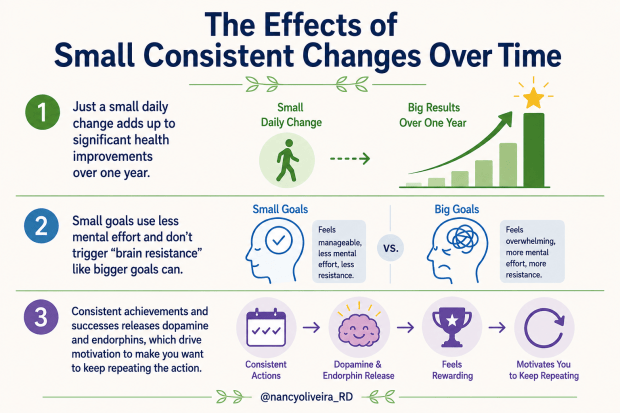
Don’t feel pressured to make a huge overhaul to your diet or lifestyle. You’ll gradually experience less intense sugar cravings (and maybe food cravings in general) with small consistent changes.